
The killing of dozens of thousands of people in Palestine, plus the conflicts in Lebanon and Syria, has led aidóni’s Academy Editor Yousr Sharawy to reflect on the sentiments around death and destruction, regardless of who is to blame.
 By Yousr Sharawy, from Alexandria
A video has circulated on Egyptian social media recently featuring a Toktok driver in Cairo carrying a Palestinian family. The family filmed the driver as he refused to take money from them after learning where they came from. More notably, they filmed him crying and pleading, saying, “Please go, may God help you, we cannot do anything, I cannot do anything. Please forgive us. Forgive me.
Palestine is a national and regional cause for Egyptians, while also considered a generational issue. It did not start on October 7 of 2023 but has been ongoing for 76 years. The most recent version of the story gained traction in the West, with raised concerns in European and American university campuses through demonstrations and calls for boycotts against Israel.
Having fought in several Arab-Israeli wars, Egypt views the Palestinian cause not only as a neighboring concern but also as a moral imperative. The sentiments of Egyptians towards their Palestinian and Lebanese neighbours are rooted in racial, ideational, religious, and humanitarian solidarity.
Throughout 2024, mass atrocities have become normalised, attended to only by “rhetoric,” platitudes, and condemnation from Arab leaders themselves, leaving the Gazan people feeling abandoned and disenfranchised. As one walks through the streets of Cairo, it is clear that Egyptians overwhelmingly support Palestinian resistance. Hamas, often labeled as a terrorist organization in Western media, is viewed quite differently here. To many Egyptians, the group represents a legitimate resistance movement standing against what they perceive as Israeli occupation and oppression. As it is often said, “One person’s terrorist is another’s freedom fighter.”
This sentiment reflects a broader regional view, where Israel is seen as a colonial power oppressing the indigenous population. Since October 7 2023, we have seen a resurgence in calls for boycotting brands seen to support Israel, with companies like McDonald’s facing public outrage. This boycott movement has deepened, reflecting widespread frustration not only with the actions of Israel but also with any entities perceived to support its military actions.
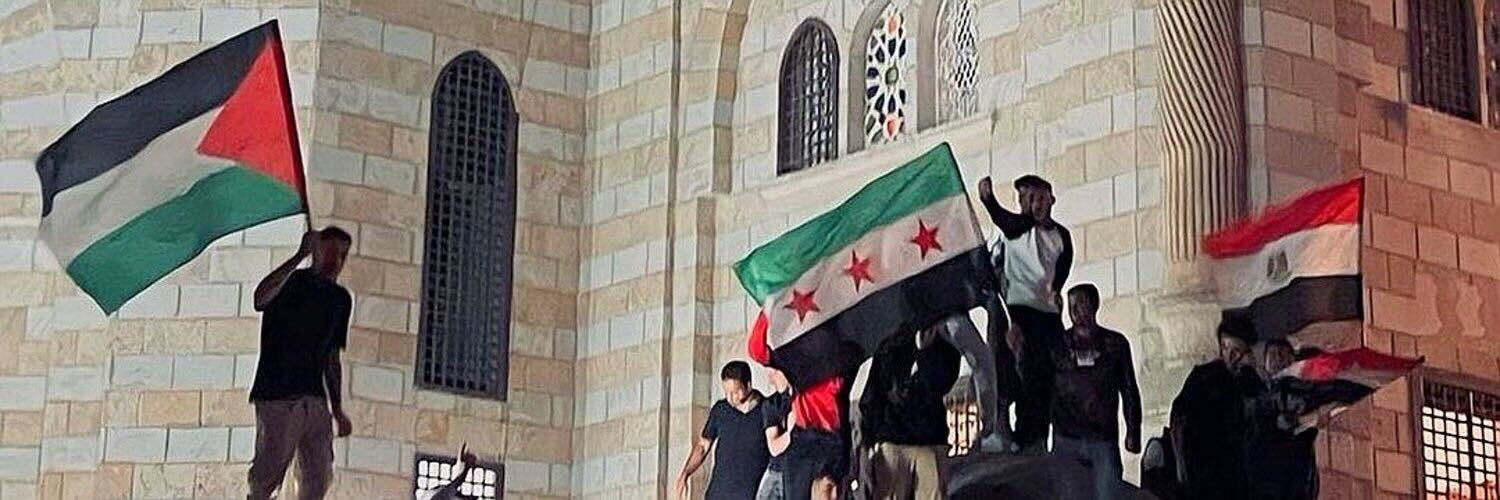
Like many other Egyptians, I have roots in the Levant. We either have family there or are descendants of migrants who were once displaced from neighbouring countries. The issue here is not that we no longer express solidarity, but that solidarity has become normalised. Many Egyptians feel they have done their “moral homework”.
It seems enough for people to simply denounce the killings of innocent women and children or share a video of a father holding a plastic bag containing the remnants of his child’s body. Or retweet a mother’s cry that her children died without having eaten dinner. This phenomenon of sharing has prompted me to critically reflect. This is not to say that sharing and raising awareness is not important—on the contrary, it is vital to raise the voices of the marginalised in a world dominated by colonial power structures. The region still suffers from both neoliberal colonial ties and militarised regimes.
Oppression here and there
Egyptians recall their own uprisings in 2011, having believed that their freedom meant freedom for their neighbours too— and they were right. Securocratic regimes oppressing protests — such as those expressing solidarity with Palestinians — contribute to colonial practices in the region. Several Egyptians have been detained for protesting Egyptian-Gazan border policies or for expressing solidarity. Some protests, however, have continued at campus of the American University in Cairo and in front of the Egyptian Journalists Syndicate. Egyptian social media show overwhelming solidarity with Palestinians and, more recently, with Lebanese people. People often express solidarity with those who are like them, notwithstanding the different opinions on the Egyptian streets. Some Egyptians argue that their country should not go to war for the Palestinians, while others are calling for the borders to be open so they can volunteer and fight themselves.
Critically reflecting on “sole solidarity” does not mean to criticise the different political options or vantage points on the political and military strategies, but rather to invite us, as brothers and sisters in humanity, to reconsider how we engage with social media solidarity and the normalisation of the moral imperative to this extent.
Another critical aspect I invite us to reflect upon is the celebration of human suffering, deeming it as resilience and heroic, rather than looking at the specific resilient coping mechanisms or resistance to everyday atrocities. The latter is definitely worth celebrating, whilst human suffering in and of itself is not resilience. At the very least, it must be framed in terms of the vulnerabilities associated with it. Many Egyptians view Palestinians as models of resilient resistance, but often overlook the vulnerabilities of martyrdom, displacement, or witnessing others’ deaths while living under constant threat.
The background noise of airstrikes, artillery shelling, drones, explosions, and military operations creates a constant soundscape of tension. Hearing this noise means they are still alive, otherwise they would have been part of the strike and deafened by death. In addition to military sounds, the distressing background noise includes sirens, rumbling buildings, and the sounds of rubble and debris, all contributing to the atmosphere of constant violence. This underscores the ongoing humanitarian crisis and the psychological toll on residents, amplifying feelings of insecurity and hopelessness. Beyond viewing Palestinians as “heroes” or “resilient in resistance,” it is crucial to humanise their experiences. People are tired, they have lost so much, and although they have not given up on their cause, they have been overwhelmingly abandoned by the world.
No victory in genocide
We should not forge narratives of ‘victory’ as a coping mechanism for our own second-hand trauma, witnessing genocide and the survivors fleeing to our countries. It is vital not to indulge in political analysis without sensitivity to Palestinian nuance and the broader humanitarian crisis. There is a humanitarian cost to their ongoing noble fight for their land, which must not be commemorated with a mere “never again” in reference to the Rwandan genocide. Instead, we must raise awareness, politicise individual human atrocity — not just the collective — and humanise the political, calling for change. This is active solidarity, beyond passive gestures.
Similarly, what has been happening in Lebanon has also affected Egyptians, with some questioning, “When will our turn come?” as Israel advances toward Southern Lebanon and Southern Syria. Hezbollah’s involvement in Lebanon presents a more complex picture. Historically, Hezbollah enjoyed widespread popularity in Egypt, especially after the 2006 war with Israel, where it was seen as a heroic force standing against Israeli aggression. However, Hezbollah’s role in the Syrian Civil War, where it supported the regime of Bashar al-Assad, has complicated that image.
For many Egyptians, especially those who supported the Arab Spring, Hezbollah is no longer seen as a purely anti-Israel resistance movement but as a group with blood on its hands from the Syrian conflict – which the world now hopes it will end, after the fall of the Assad dicatorship. This view is particularly strong among Syrian refugees in Egypt, who have experienced firsthand the violence Hezbollah supported in Syria. The death of key Hezbollah figures has even sparked celebrations among Syrians, a stark contrast to the sentiments of those who still revere Hezbollah for its resistance against Israel. This situation has escalated social media tensions between Egyptians and Syrians, particularly over the celebrations of Hezbollah’s leaders’ deaths, considering them supporters of Gazans.
The humanisation of solidarity is often absent when we focus on strategic rational security analysis. Overlooking the Syrian genocide committed by Assad’s regime for decades, supported by Hezbollah and Iran-backed militias, contributed to the desensitisation of genocide that we are witnessing today. It takes only one picture of an innocent child drenched in blood to make us scroll past the next tragedy. Egyptians consistently express enduring solidarity with Palestinians, Lebanese, and Syrians. However, it is the humanitarian sensitivities in narratives and political stances that they have no platform to express other than through social media that I urge us all to reconsider.
(Edited by Rogerio Simoes)

 aidoni.org