
Algerians speak Arabic and French, and everybody understands each other, right? Not exactly. In modern Algeria, both compete with Tamazight languages, such as Kabyle, and face the growing use of English. Generations, history, and cultures keep clashing in a constant struggle for national – and individual – identity.
By Nesreen Yousfi, from Algiers

When my mother was growing up in 1970s Algiers, the capital of Algeria (El Djazaïr, in Arabic), she made the mistake of speaking Arabic in her Kabyle household. My uncle Saïd, a staunch believer in the preservation of our cultural heritage as Amazigh people, – an umbrella term for the various indigenous groups of North Africa – and in disagreement with the increasing Arabisation of the public space, responded firmly to his little sister’s faux-pas. “You leave your Arabic at the door. At home, we speak Kabyle, and we speak French.”
While Kabyle was important to our heritage, my family also believed that French was an essential tool to communicate and stay connected to the outside world. But outside of my grandparents’ shabby bungalow walls, many Algerians today have lost interest in the European language all together, no doubt in part because of its violent imposition on the older generation.
You see, my uncle understood that language, identity, and knowledge were inseparably intertwined. And observing the evolution of language in Algeria and my family through each generation, his fears were far from misplaced.
Yes, it’s complicated
When walking through the streets of Algiers, it is difficult not to notice the two, three, sometimes even four languages splattered across road signs, billboards, and shop signs. Like other countries in the Maghreb region, Algeria has had a long and tiresome history with language. The melange of ethnic groups and colonial influences means that no single language is spoken or understood by everybody. Alongside new state interests to boost international tourism, multilingualism is etched into the fabric of our society for accessibility to citizens and visitors alike.
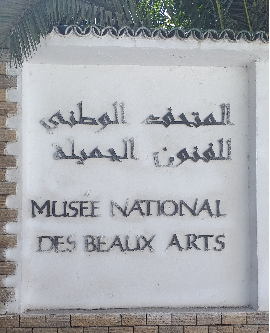
As I began visiting more museums in Algeria’s capital, it became evident to me that the state has yet to form a structured approach to our abundance of languages. It is not uncommon for museums such as the National Museum of Fine Arts to use inconsistent signage – one artefact’s description given in two languages, a painting in the next room only described in one – and this all changes from one museum to the next.
This mismanagement becomes even more jarring when I remember that what we are reading is seldom written in our native tongue.
Initially a Tamazight-speaking region, the Arab conquests introduced Arabic in the eighth century. Both Arabic and Tamazight languages evolved together, forming into a third colloquial language – Dardja, or Algerian Arabic, the most widely spoken language in the country today.
However, these were sidelined to make space for French in the mid-1800s. France’s vigorous cultural assimilation policies would ban all other languages from the public sphere. Whilst French became the language of instruction at school, Classical Arabic was delegated to be learnt in the shadows of Mosques and religious schools, whereas Dardja (which was to evolve with French influence) and Tamazight languages like Kabyle were confined to the home, cafes, and street markets.
Gradually and clumsily, Classical Arabic climbed the sociolinguistic ladder, hoisted by the Boumediene administration (1965-1978), and screwed into place by each leader who followed him. In this strategy to cement a purely Arab-Muslim national identity to unify the country, our multilingualism was, once again, pushed to the side.
French instruction still plays a part in STEM subjects at university, causing a rocky transition for public school students who had just finished their schooling in Arabic. As the state wishes to drift further from French influence, there are plans for English to replace it, and so, another language joins the ranks with little thought put into how to ease the shift.
After independence in 1962, our cultural identity needed restoration. But not unlike French colonialism, the newly independent Algerian state bore little interest in our cultural or linguistic diversity.
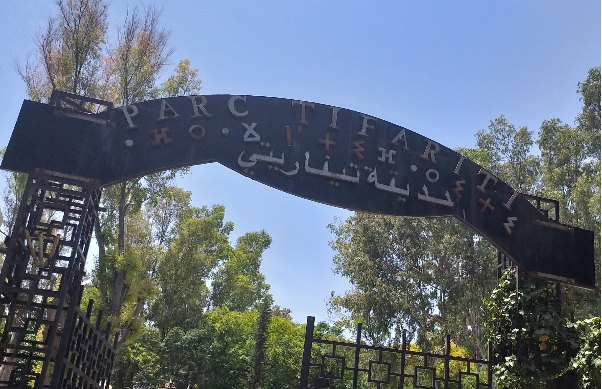
But what was to happen to Tamazight? The oldest language of our people, the one that scraped to survive through every foreign invasion? Like Dardja, Tamazight languages are passed down orally. They have their own writing system – Tifinagh – and can also be scribed in a Latin equivalent, but the education ministry neglects its duty to instruct either on a nationwide scale, reserving it for Amazigh-majority regions like Kabylia.
Tamazight only became an official language in 2016, and this was not without decades of rallies and bloodshed. Today, I cannot help but feel the insincerity of the Tifinagh signage. Why display a language that only a handful of us are taught how to read? If Tamazight truly held the same status as Arabic, would it not be treated with the same respect and importance? Classical Arabic was, though we often forget, also a foreign tongue. And yet it is enforced on us all.
Outside world vs true identity
My parents each speak four languages. My brother three, and myself, born and raised in the United Kingdom, only two – English and French. It has never been lost on me that in our globalised society, I am fortunate to have these two languages as a native tongue – but they are not ones that indicate my cultural heritage.
It would seem that my uncle Saïd was right about one thing in particular – Kabyle would become an endangered language in my family. Although Dardja becoming more dominant is typical in Kabyle families living in Arabised regions, French growing in domestic status is far rarer, and has largely stemmed from my family wandering off the path laid by my uncle’s footsteps, which was not just about preserving a second language for education, but our indigenous culture too.
Kateb Yacine, an Algerian-Amazigh writer from the Chaoui tribe, lived a similar situation. Yacine fought for the recognition of Tamazight and critiqued Arabisation. However, he was still partial to writing his novels in French, describing it as “un butin de guerre” – the spoils of war we gained after the struggle for independence (1954-1962) – and “what good are the spoils of war if we have to return them to their owner at the end of the hostilities?”
The fact is that each language in Algeria has a role to play, and this separation between understanding a language as part of our identity, and preserving another as a simple tool to learn and communicate with, seems essential to overcome Algeria’s linguistic challenges.
Following global trends in the Francophone world, the younger generation has been favouring English as a third language rather than French. It is the language of commerce, of many of our favourite shows, and it allows us to stay more connected with the international community. There has also been a rise in grassroots initiatives to promote Tamazight and preserve indigenous culture via online platforms, filling in the gaps where state policies (and imprudent families) have been failing.
So, whilst Arabic, English, and French give us better access to the outside world, only Dardja and our Tamazight dialects can point to our true identity as Arab-Amazigh people. A singular national identity is senseless in face of the pluralistic reality on the ground, and hopefully our leaders will allow for the advantages that can come with sincerely embracing our multilingualism and cultural diversity that has always been a part of who we are.
(Edited by Rogerio Simoes)

 aidoni.org