
While those who can afford it protect themselves with air-conditioning and water, migrant workers and low-income communities face the daily challenge of survival under the sun in India – made even more unforgiving by climate change.

By Shriya Roy, from New Delhi
It feels almost ironic to write about a record-breaking heatwave sweeping across Northern India, killing many in the process, as I sit to pen down this letter in the air-conditioned room of my rented apartment. Perhaps to an extent it is.
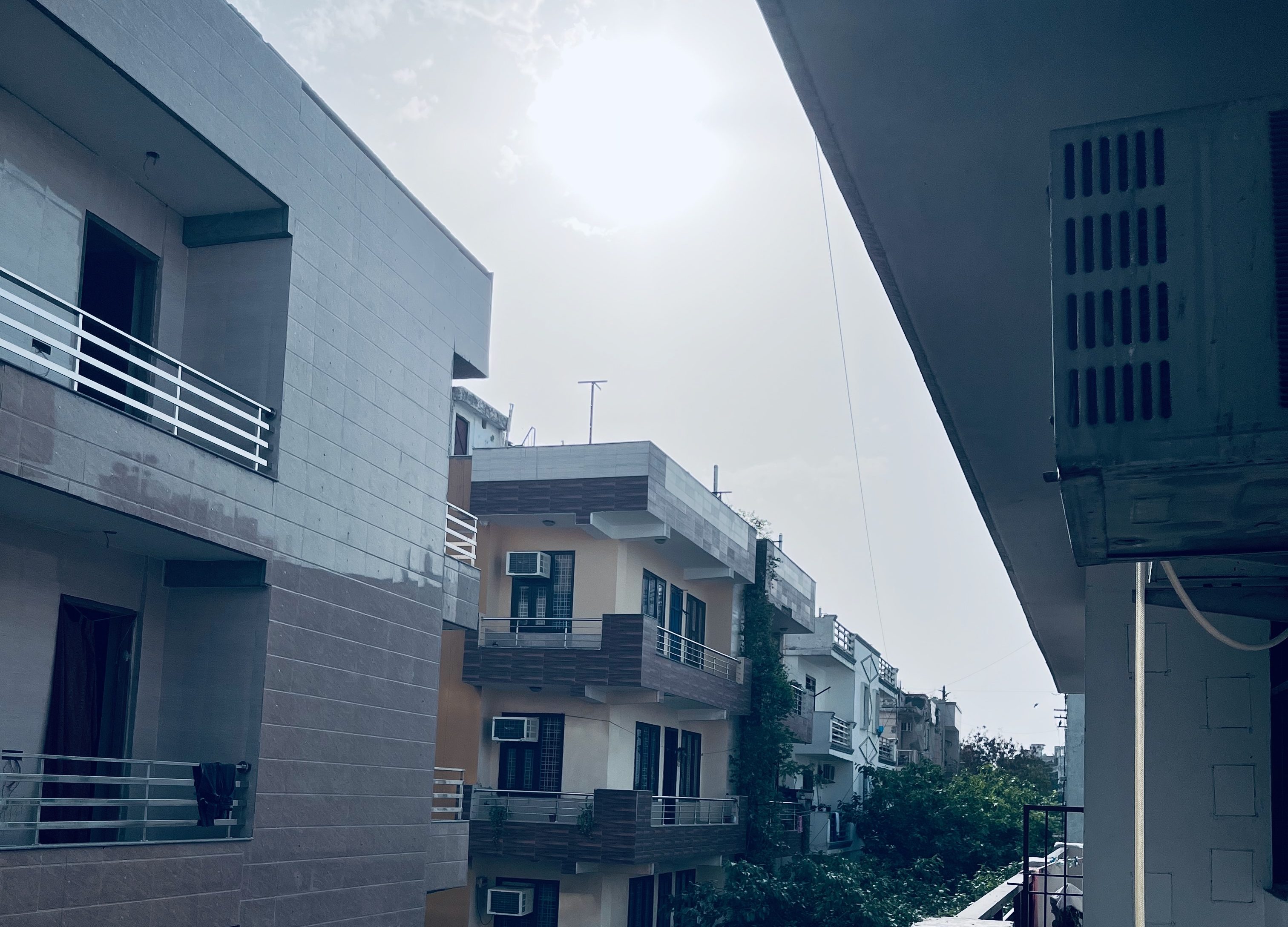
As I step out onto my balcony for a very short hesitant second, a gush of hot air hits my face, making me regret the decision that very minute. Then I look at the building under construction right in front of me. In the scorching heat at 2 PM, workers have no respite. For them, the heatwave is as real as their daily wage. They don’t have a choice, and so they struggle with this reality, each morning when they wake up. For us it may be a heatwave phase, for them it’s their daily life.
For those of us privileged enough to afford to live in apartments with air conditioning, the heatwave, with record-breaking temperatures for New Delhi of above 49 degrees and a disputed measurement of 52, remains confined within the scene of our television sets or the news app on our phones. Maybe some of us will pass a comment here and there on “how the planet is being destroyed by our actions”, but the very next moment those same people will take out their air-conditioned vehicle and head out, not feeling a hint of “that heat”, to another space with central air conditioning. That’s life for the privileged in the boiling capital city of New Delhi.
Delhi is, however, one of those cities in India with a huge influx of migrant workers, who come from different parts of the country to make a living, mostly through daily wage-earning activities. Most of these people work in the informal sector, leaving them hardly with any rights when it comes to wages, their work, working hours, working conditions, and so on.
At the end of May, Delhi’s Mungeshpur Station of the Indian Meteorological Department (IMD) recorded the mind-boggling temperature of 52.9 degrees celsius. The authorities claimed the number resulted from a censor error, but a 2-degree difference matters least for those toiling on the road to earn their living.
I have consciously chosen not to order food or groceries online in the daytime, as for the gig workers hoping to get as many orders as possible there is no law protecting them from this heat. The balcony offers me a view of several of them in their electric bikes, riding in the scorching heat, without a break, because “things need to be delivered in 10 mins or less”. “10 mins or less” is the cost of one’s life, as the news flashes that at least 200 people have died due to the heatwave. We look at the number, and for the administration it seems to be just another statistic. If they dwell more into it, they would realise that amongst those 200, the majority comes from a section of society that has no choice but to brave the heat.
Short of breath and water
The woman who comes to cook for me rings the bell every day panting, short of breath, almost on the verge of collapse. I call her ‘Didi’ (which means big sister). She tells me how despite not feeling well, she must go to work everyday, because there is no choice. Her husband, who works as a delivery agent, throws up every evening as soon as he gets home, after those he served with food “within 10 mins” did not even bother to offer him a glass of water.
The heatwave has brought another crisis in the capital city: Delhi is running out of water. There is an acute water shortage, and the government announced a fine of Rs 2000, for anyone found wasting it. This story again has two very different sides, playing daily right in front of my eyes.
Standing on the very same balcony, I glance out to see the terrace tank of a few of my neighbours overflowing water onto the road, while on the other side the migrant community who also resides in the neighbourhood, does not even have an official water connection to fall back on. For many of my privileged neighbours, a mere fine of 2,000 is nothing, while the others stand in due, waiting for the government’s water tanker to arrive, as they fight to fill every small container they can lay their hands on. That’s the story of two Delhi’s living within 10 meters of one another under this record heatwave.
The administration in New Delhi, while alerting residents about the ongoing heatwave, requested colonies to ensure coolers and ORS tablets among other facilities for the workers. But, the question is, who is checking? The authorities also said that every construction activity to pause from 12 noon to 3pm, to allow workers to rest and avoid having to withstand the unbearable heat. But the question again is, who is checking?
My next door neighbour just installed a new air conditioning unit, while the person who works in her house struggles in the heat to clean it every day, most often not even allowed to sit near it and feel its cold air. Those privileged attend seminars on climate change. Policymakers make big statements about what must be done. “Climate change is real” is the buzz phrase of the season. However, it makes me wonder, is it really for these people?
For those living in the margins of our communities, climate change, manifested as this scorching heatwave, is real. As real as the blisters on their feet from walking barefoot on the hot roof. But do we think about them? Or do we just write a letter, say a word, shut the television, and forget?
(Edited by Rogerio Simoes)

 aidoni.org